
In March, we once again created a space where women could talk about what matters, recharge, and find support and solidarity.
This year, Women Solidarity Weeks brought together discussions on feminism, mental and physical health, women’s military and volunteer experiences, as well as collective actions, including the participation of the Kharkiv column in the Women’s March in Kyiv.
WSW is an annual social and educational project created by women for women. This year marked the eleventh time we held it.
We focused on topics such as gender inequality, women’s experiences during wartime, bodily autonomy, sexuality, and women’s rights.

.jpg)
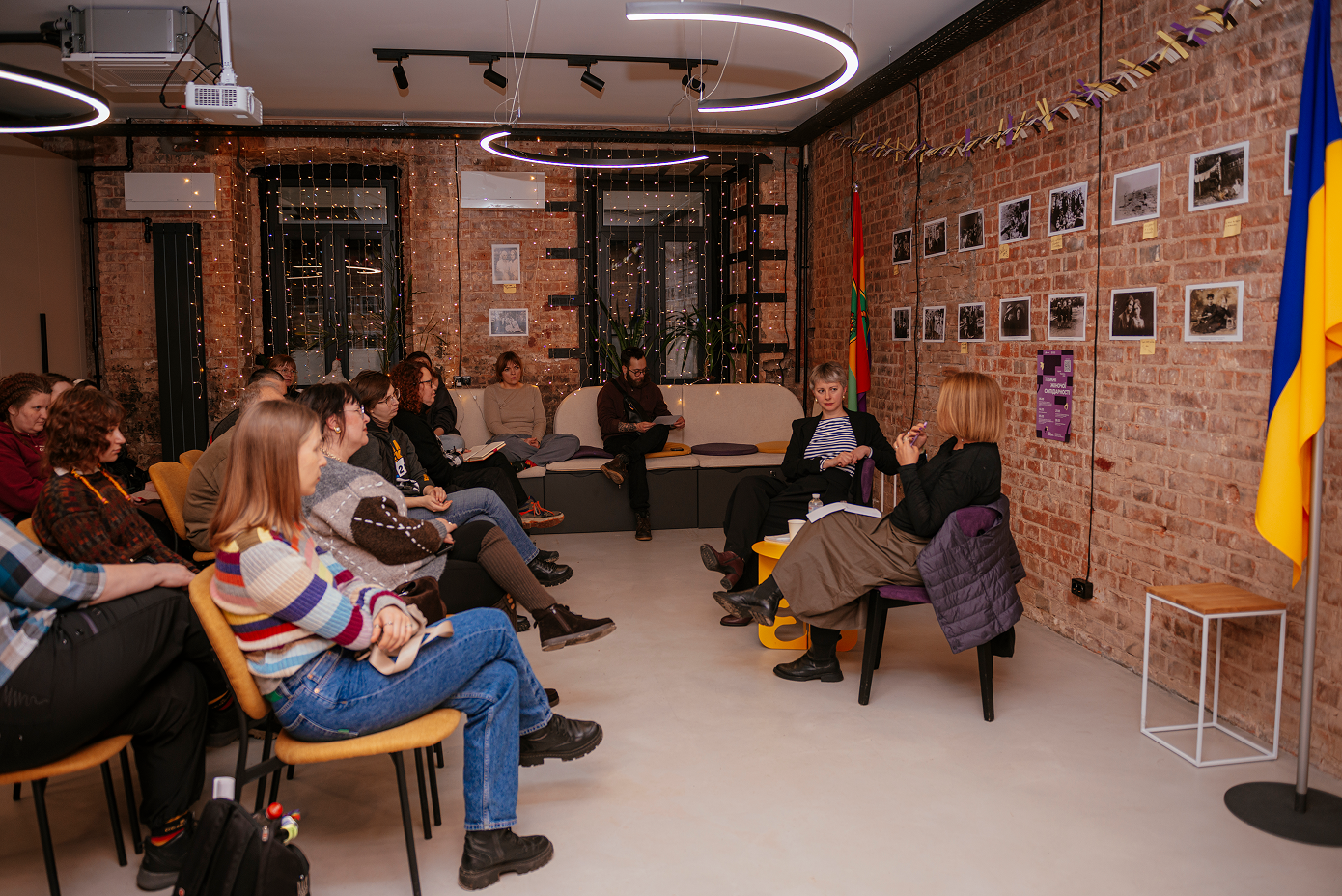
The first major event was a public discussion titled “On the Traditional and the Modern: Uncomfortable Feminist Questions”.
The discussion, led by Kateryna Botanova, focused on how modern changes and pre-modern practices intertwine during the war in Ukraine, forcing us to rethink progress, tradition, and gender roles.
This event set the tone for the entire month — through complex but necessary questions about solidarity and women’s rights.
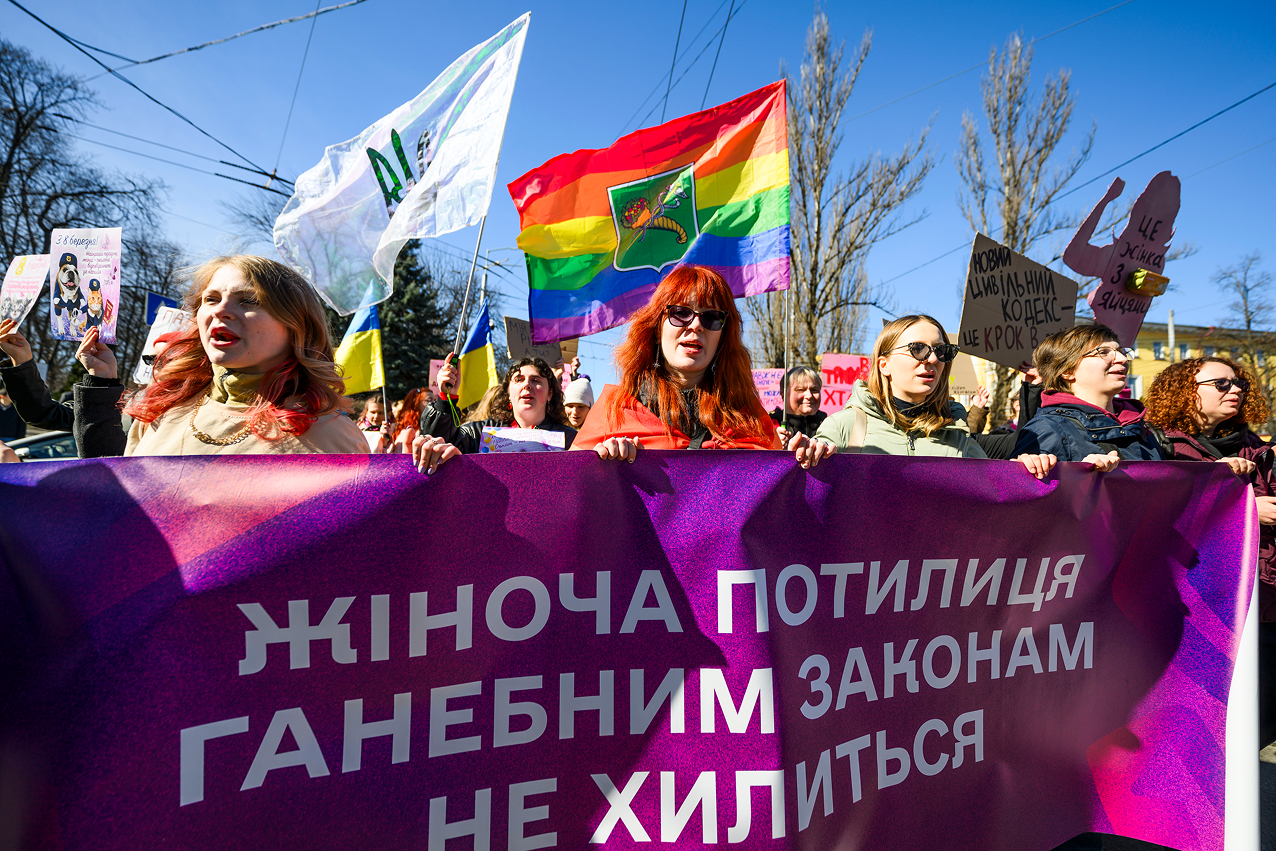
On March 8, we decided to join the Women’s March — the first one in Kyiv since the start of the full-scale invasion.
We took to the streets demanding that Draft Civil Code No. 14394 be withdrawn and revised with the involvement of civil society organizations and independent experts.
In its current form, the draft contradicts European human rights standards and the principles of non-discrimination: women risk becoming hostages to dangerous and abusive marriages, and the rights of LGBTIQ+ people are restricted even further.
One of the main events was Recovery Day on March 14 — a space dedicated to self-care, socializing, and replenishing mental energy.
Participants had the opportunity to take part in making dreamcatchers and creating collages, clay modeling, and a tea ceremony, as well as attend educational lectures.


As part of the WSW, we discussed topics that are often overlooked in public discourse: mental exhaustion, reproductive rights, sex education, perimenopause, and the impact of stress on the body.
These conversations helped shed light on important aspects of the female experience and provided women with practical tools for self-care.

Memory practices held a special place in the program.
The Memory Zone and the “Cranes of Memory” workshop served as a space for quiet reflection and remembrance of the women who lost their lives as a result of the war.
It was important for us to combine a discussion of the present with a focus on memory and women’s stories of war.

We paid special attention to stories about women in the military and the experiences of female veterans.
The panel discussion “Why Aren’t Women in the Trenches Yet?!” kicked off a conversation about the barriers and visibility of women’s military and veteran experiences.
The conversation focused on the doubts, fears, and roles we assume during wartime, as well as our simultaneous awareness of our own responsibility in the shared struggle.
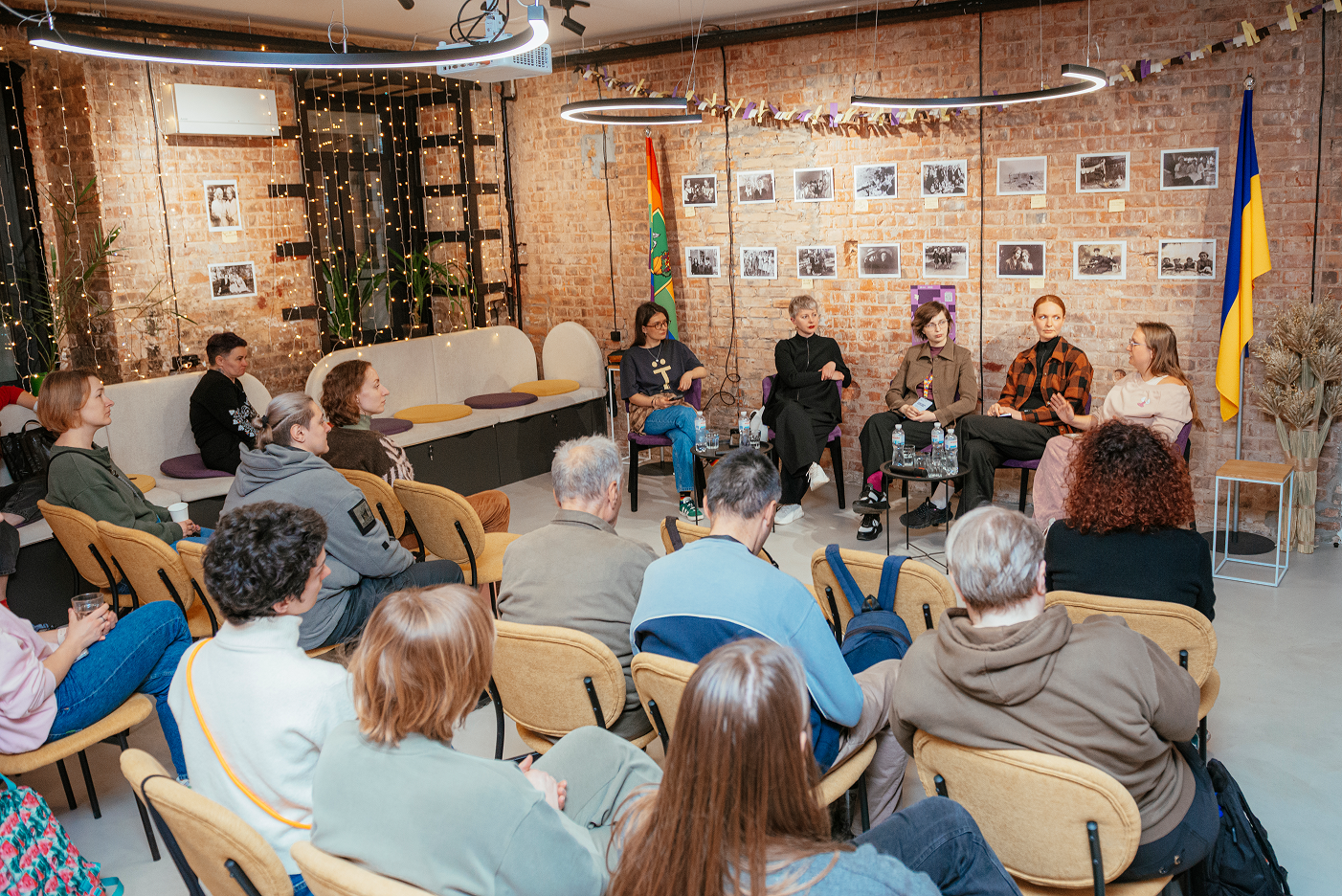
On March 27, we decided to create a space for feminist reflection on our experiences: a roundtable discussion bringing together representatives from various organizations in Kharkiv, Kyiv, and Lviv.
We are surrounded by women who need humanitarian aid just to survive. And at the same time, our colleagues criticize us for not having a sufficiently inclusive or intersectional perspective.
So we created a safe space and had a broader conversation — about the strategies we choose, what unites our agendas, and whether there is still a place for feminism in the contemporary women’s movement.
%201.png)
Throughout the month, as part of WSW, we held a fundraising campaign in partnership with the VETERANKA movement to support a psychological rehabilitation program for female veterans.
We brought together events, donations, and charitable activities around a common goal — supporting the physical and psychological recovery of women after their service.
This became an important part of practicing solidarity not only in words but also in actions.
Women’s Solidarity Weeks 2026 became a month of meaningful conversations, remembrance, care, and mutual support.
We talked about feminism, women’s rights, the experience of war, and recovery — while also creating a space where women could simply be there for one another.
Thank you to everyone who joined us and helped build this solidarity together 💜
These activities were made possible thanks to the support of the Estonian LGBT Association and the Kvinna till Kvinna Foundation. The psychological counseling sessions were organized with technical support from UN Women in Ukraine and funding from the UN Women’s Peace and Humanitarian Fund (WPHF) — a flexible and rapid financing mechanism supporting quality interventions designed to enhance the capacity of women to prevent conflict, respond to crises and emergencies, and seize key peacebuilding opportunities.


